
Wells and septic on rural properties.
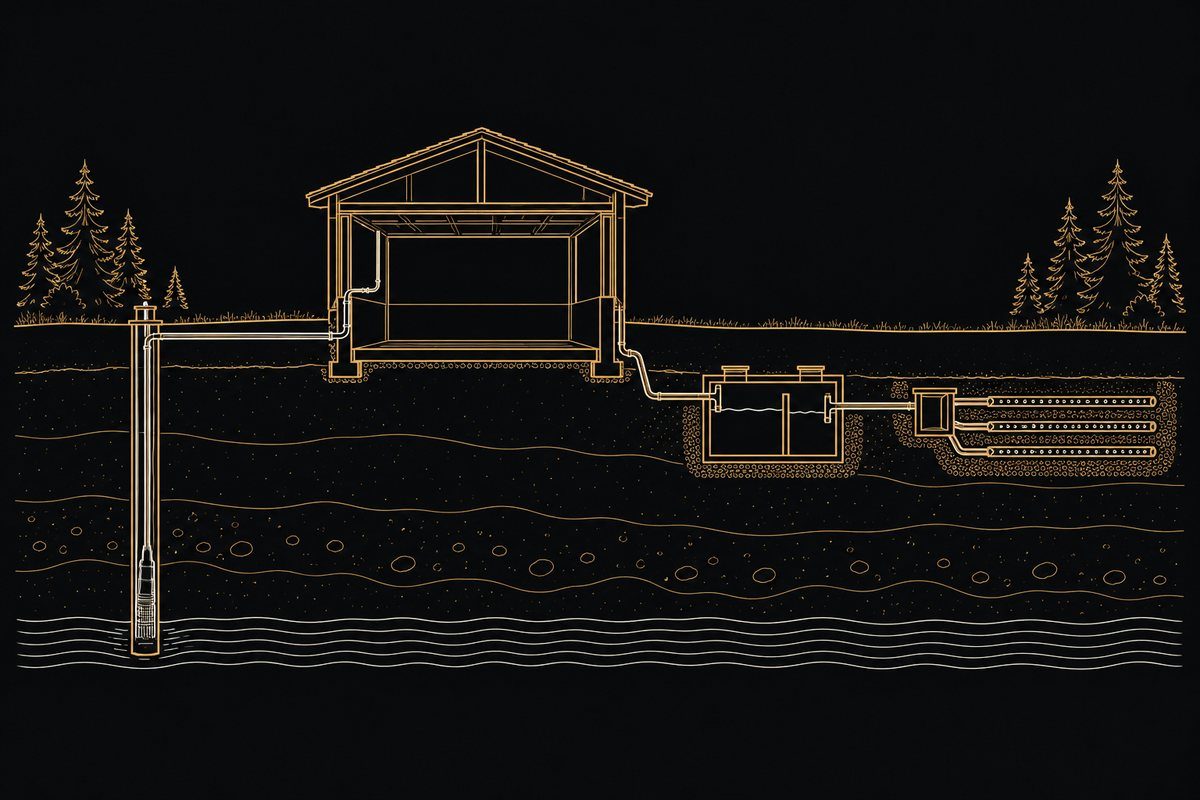
Outside city sewer and water lines, around Hermantown, Proctor, and Cloquet, many homes run on a private well and a septic system. Both come with state disclosure rules, and septic often comes with a county inspection.
- Sellers must disclose known wells and how sewage is handled, in writing, before a purchase agreement is signed.
- A well disclosure certificate is filed at closing. The fee is $54.
- St. Louis County requires a septic compliance inspection before most transfers of land with a home, unless a current certificate exists.
- Carlton County requires compliance inspections at point of sale in shoreland areas.
On this page
Wells: what the seller must disclose
Under Minn. Stat. 103I.235, before signing an agreement to sell, the seller must disclose in writing the status and location of all known wells on the property. For each well, the disclosure says whether it is in use, not in use, or sealed, with a map drawn from available information. If there are no known wells, the seller states that.
- At closing: the information goes on a well disclosure certificate filed with the county recorder. The Minnesota Department of Health (MDH) lists the fee as $54, effective July 1, 2025.
- If a seller hides a known well: the seller is liable to the buyer for the cost of sealing it plus reasonable attorney fees, if the buyer sues within six years after closing.
- Unused wells: a well that isn't in use must be sealed unless the owner holds an MDH maintenance permit (Minn. Stat. 103I.301). MDH lists the water-supply well maintenance permit fee as $225.
My advice: Minnesota doesn't require a water test when a home sells. Buyers of a home on a well should make a water test part of the inspection contingency and use an accredited lab.
Septic: what the seller must disclose
Under Minn. Stat. 115.55, subd. 6, before signing an agreement to sell, the seller must disclose in writing how sewage from the property is managed. If it doesn't go to a permitted treatment facility, the disclosure includes a description of the system, the legal description and county, and a map of the system's location as far as practical. The seller must also share what they know about the system's compliance status and whether, to their knowledge, a straight-pipe system exists.
A seller who doesn't disclose is liable for the cost of bringing the system into compliance plus reasonable attorney fees. The buyer must sue within two years after closing.
St. Louis County (around Hermantown and Proctor)
St. Louis County administers its septic rules under Ordinance 61. Its guidance for buying and selling says a compliance inspection is required before the sale, transfer, or contract for deed of land with a dwelling on it, unless one of these is still valid:
- A Certificate of Compliance for a new or replacement system issued within 10 years.
- A Certificate of Compliance for an existing system issued within 3 years.
- A Notice of Nonconforming issued within 3 years.
If the system fails: a Notice of Non-Compliance means the system must be replaced within 12 months in shoreland areas or 24 months elsewhere. An imminent threat to public health must be fixed within 10 months. If it isn't fixed before closing, the county requires 100% of the estimated replacement cost to be held in escrow at closing, along with a contractor estimate and a transfer agreement.
Winter sales: when the ground is frozen, the county allows closing with a transfer agreement, a contractor estimate, and 100% escrow, with the inspection done when conditions allow.
Not every parcel falls under the county program. The county's Onsite Wastewater office can confirm which rules apply to a specific property: (218) 471-7103.
Carlton County (around Cloquet)
Carlton County administers its septic ordinance (Ordinance #30) county-wide. Its Zoning and Environmental Services office states that compliance inspections are required at point of sale or permit application in shoreland areas. The county also publishes a septic disclosure form. Questions go to Zoning and Environmental Services at (218) 384-9176.
Who can inspect
Septic inspectors, designers, and installers must be licensed by the Minnesota Pollution Control Agency (MPCA), which runs a public license search. As with any inspection, the buyer or seller chooses the inspector. I can give you two or three names to consider.
Sources
- Minn. Stat. 103I.235, Disclosure of wells to buyer
- Minn. Stat. 103I.301, Sealing wells and borings
- MDH, Well and boring fee schedule
- Minn. Stat. 115.55, subd. 6, Disclosure of subsurface sewage treatment systems
- St. Louis County, Onsite Wastewater: Buying and Selling Property
- Carlton County, Subsurface Sewage Treatment Systems
Reviewed September 2026. General information only, not legal or engineering advice. County rules change, so confirm with the county before you list or write an offer.